
| ||||||||||||

“Correction” can be a scary word for investors. But, at times, it’s an unavoidable one. And in the last couple of weeks it has been discussed more and more.
As of November 20, the S&P500 fell around 10 percent from its all-time high, erasing much of its gain for the year. Such a retreat meets the classic definition of a market correction.
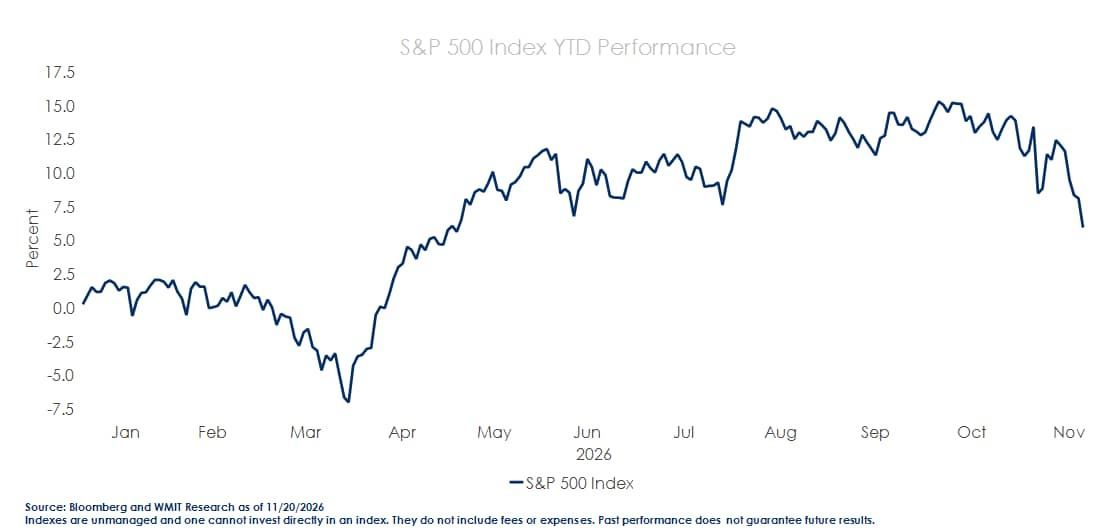
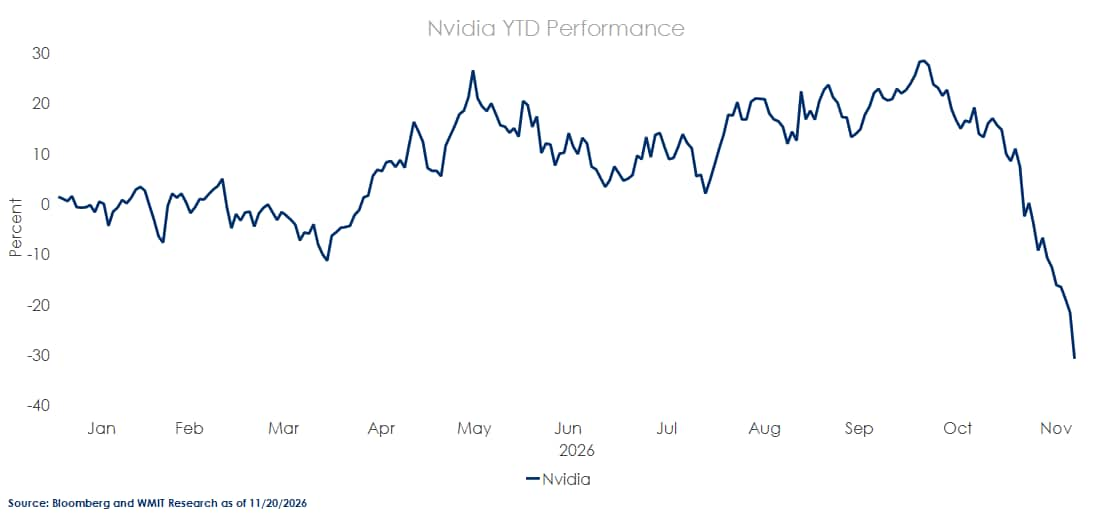
A large part of this retreat is being credited to pressure and disruption in the tech sector. Indeed, AI leader and market behemoth Nvidia is down much more.
Why?
The exact cause of market moves can never be known precisely, but coming into the fourth quarter:
- Equities were expensive.
- Future earnings expectations were very high (especially for AI related companies).
- The biggest companies had switched from buying back stock to issuing it.
- Hyper-scalers (e.g. Amazon, Google, Meta) were making huge investments in AI infrastructure backed by extremely aggressive assumptions for AI model revenue growth.
- U.S. growth and labor markets were solid, while inflation remained well above target and trending in the wrong direction.
- As a result, the Federal Reserve has been tightening monetary policy (raising interest rates), which both makes capital less available and reduces the present value of all future cashflows (including equities). We believe we are in the overheat/tightening phase of the business cycle.
As the fourth quarter progressed, leadership questions and actions arose at Nvidia, which added to general uncertainty about the tech sector and the path of AI-growth. But with the confusion there, tech sector volatility increased, adding pressure to the overall market decline.
You can never be sure what spark will set off the fire, but with that much tinder lying around, a decline isn’t a big surprise.
Future risks remain
While some days the market seems to fight back a little, the general trend recently has been down. Indeed, other than equities cheapening a bit, every item on the prior list remains in force.
More ominously, much of the solid US growth backdrop has been driven by:
- AI capital investment financed with external capital.
- Consumer dissaving on the back of rising asset prices.
To the extent money becomes tighter and assets fall, financing the AI buildout will become more difficult and consumer spending may slow. US growth could enter a self-reinforcing slowdown. (Related: Weathering a downturn)
If equities continue declining, the Federal Reserve may face a choice between declining growth and still-too high inflation. Will they prioritize growth or inflation? That remains an open question.
This is normal (even if it doesn’t feel like it!)
That said, equity market declines happen all the time and this one isn’t unusual. We’ve had over three years of unusually good equity market performance, so sell-offs can feel especially unnerving.
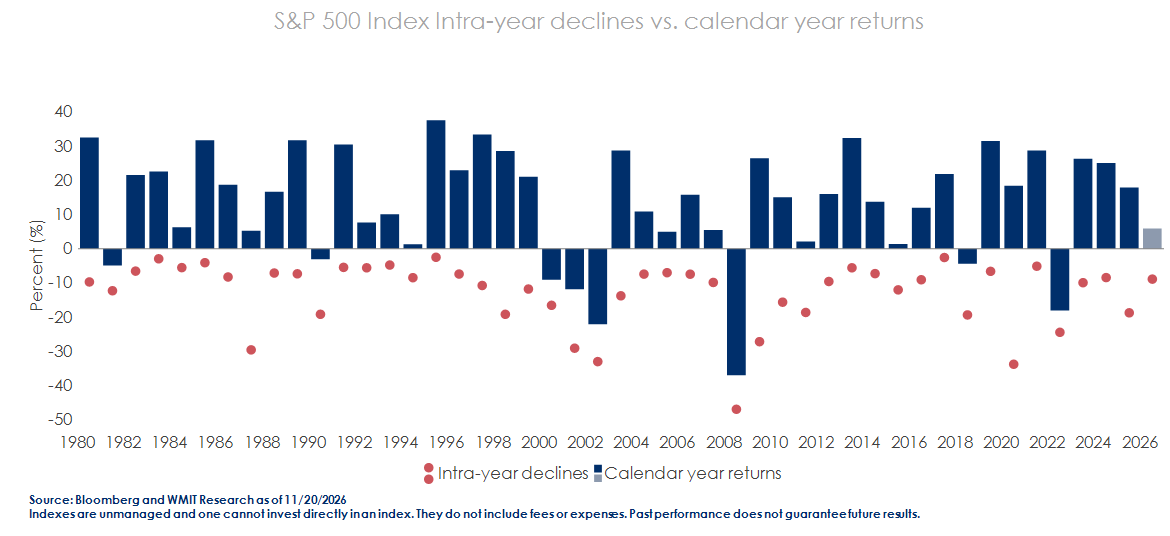
The chart below shows calendar year returns for the S&P500 paired with the largest intra-year decline. It is extremely normal for the stock market to sell off 10 percent or 20 percent at some point during the year. (And sometimes much more!)
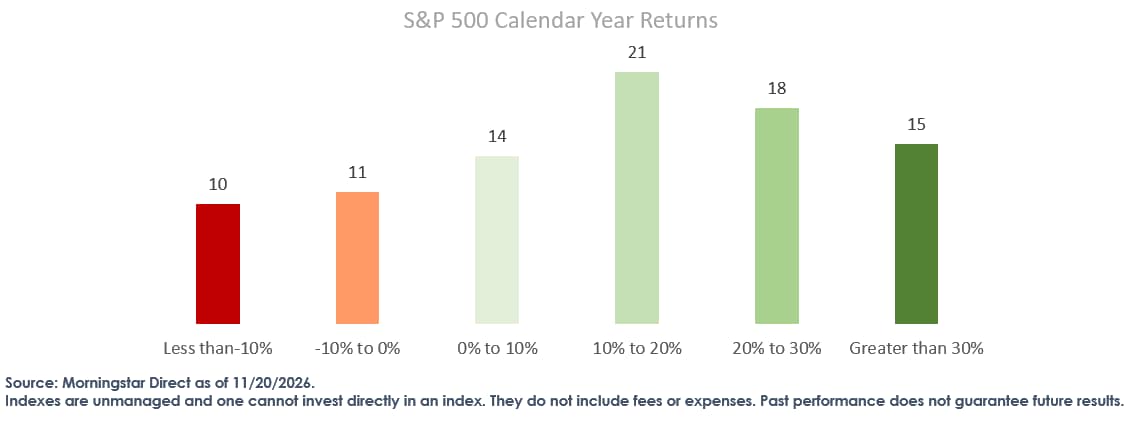
Returns can even go negative. The chart below shows the distribution of annual S&P500 returns back to 1937. For the most part, they are positive, but occasionally they are negative. That is expected.
Investing in a capitalist system works very simply: in exchange for taking on risk, you get paid an expected return. That expected return isn’t guaranteed and sometimes comes in a lumpy way. But bearing that uncomfortable risk is what earns the return. And so, over a longer-term horizon, markets have a positive expected return. (Related: The basics of investing)
The chart below shows historical drawdowns for the S&P500 back to 1970 and the subsequent 1-, 3-, and 5-year returns. Over the long run, markets have historically recovered.
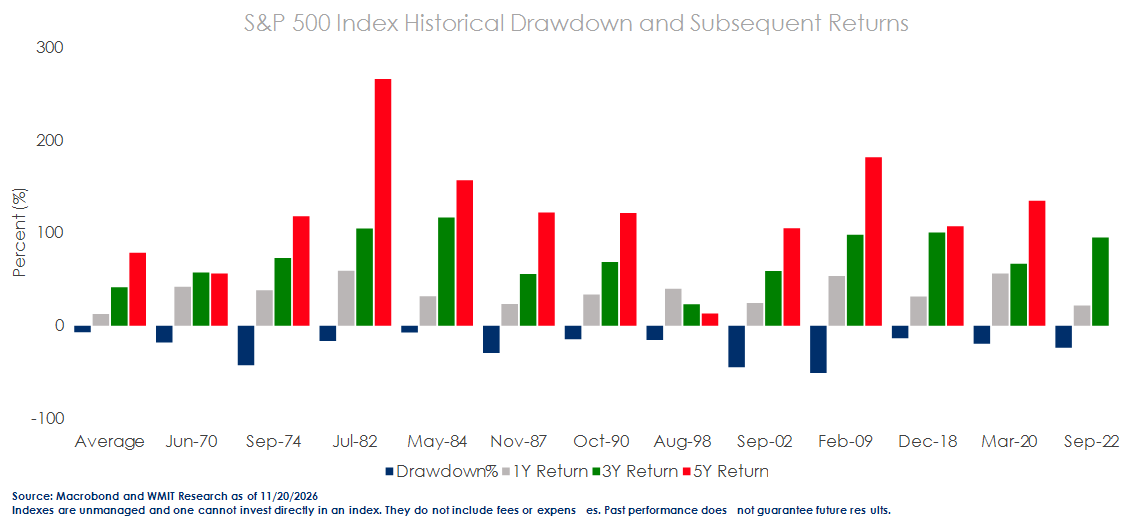
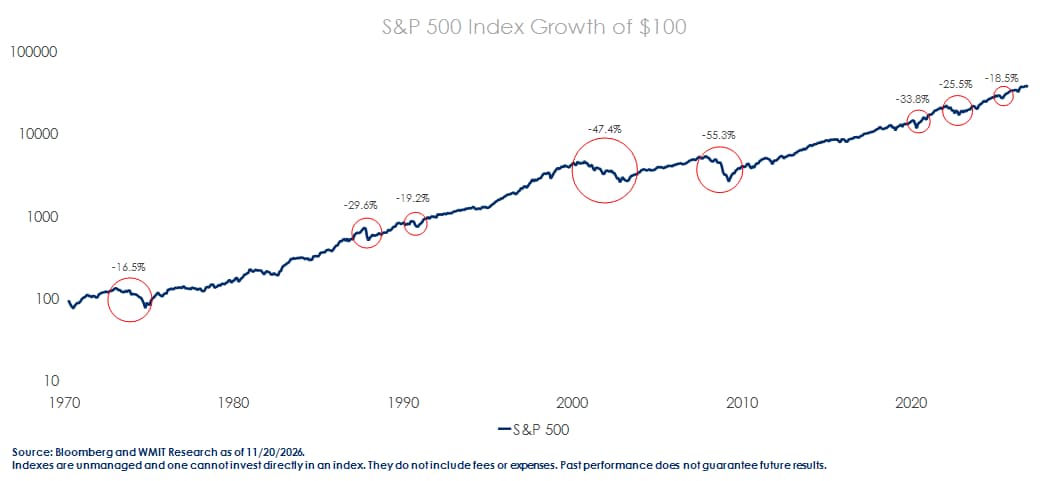
So, while declines of this nature are painful, they are also normal. And in exchange for feeling and bearing that pain, over the long run, markets offer a positive return, as the chart below demonstrates.
What to do about it
Given the ongoing risks, it is prudent to ensure you are following your risk tolerance and avoid highly risky positions. (Related: What is your risk tolerance when it comes to investing?)
The smartest way to navigate turbulent markets is to have a plan and stick with it. Sticking with your plan helps ensure you don’t take more risk than you can bear and that you are still on the field when markets eventually rally again, whether that’s a week from now or several years from now.
In conclusion
Big equity market sell-offs can be scary. But they are also normal, and indeed are the reason investors get paid to bear risk over the long run. So, make sure you stick with your plan and don’t take more risk than you can bear. It can pay to bear the risk over the long run, you simply must ensure you can endure the short run as well.
Discover more from MassMutual …
Institutional market update 3Q 2026
Whole life insurance: Where ‘buy term and invest the rest’ may falter
Winning the long game: What golf teaches us about investing
______________________________