
| ||||||||||||

It will be a small operation. Fewer than 10 employees at a single location. Probably less than $250,000 in annual sales to start. Namely, it will be a micro business.
But, besides knowing your market and having the right mindset, you need funds to get it off the ground. (Related: Starting a business)
“Cash flow is the fuel that turns a good business idea into continued growth,” said Brian Trzcinski, a MassMutual Business Solutions Consultant who holds the Certified Exit Planning Advisor (CEPA®) designation. “So establishing reliable sources of funding gives micro businesses the flexibility to navigate the unexpected and capitalize on opportunities.”
Most likely, you already have some resources to draw on — personal savings, investments, retirement savings, or property holdings. And maybe you can get contributions or loans from family and friends, although those can come with personal strings attached. (Related: Borrow from your portfolio?)
And there’s business credit cards that, while typically charging relatively high interest rates, could be good for short-term, flexible expenses that you can pay off quickly. Additionally, there are often financing programs for certain types of business equipment, like heavy machinery or commercial restaurant equipment.
But what if your funding needs are beyond these types of vehicles?
A bank microbusiness loan?
This is a typical funding method for launching a business. After all, banks offer structured term loans and lines of credit at competitive interest rates. And a long-standing banking relationship can be an asset as your business grows.
But you have to convince the bank your business will make enough money to pay back the loan. Banks typically have high standards for that, which can make getting the loan difficult. So, what does it take to qualify?
- Credit score. The owner typically has to personally guarantee a small business loan. So many banks look at an owner’s personal credit score to see if it is high enough to merit the risk.
- History. Banks typically require at least two or more years in business and around $100,000 in annual revenue, although requirements vary by lender, which a brand-new micro business may not yet have.
- Documentation. Tax returns, bank statements, financial statements, and a business plan with financial projections will likely be required.
- Collateral. Depending on the size of the loan, various assets — equipment, inventory, real estate, or accounts receivable — will be earmarked for the bank if the loan goes unpaid.
A micro business, especially one just starting out, may have trouble meeting these requirements.
Also, some enterprises may find the bank standards and rules for a loan can be a little constricting. Loan covenants may restrict how you use the funds, limit additional borrowing, or require you to maintain certain financial ratios. For an entrepreneur who wants flexibility in those early, unpredictable months, that could feel like a straightjacket. So, some entrepreneurs prefer not to deal with banks.
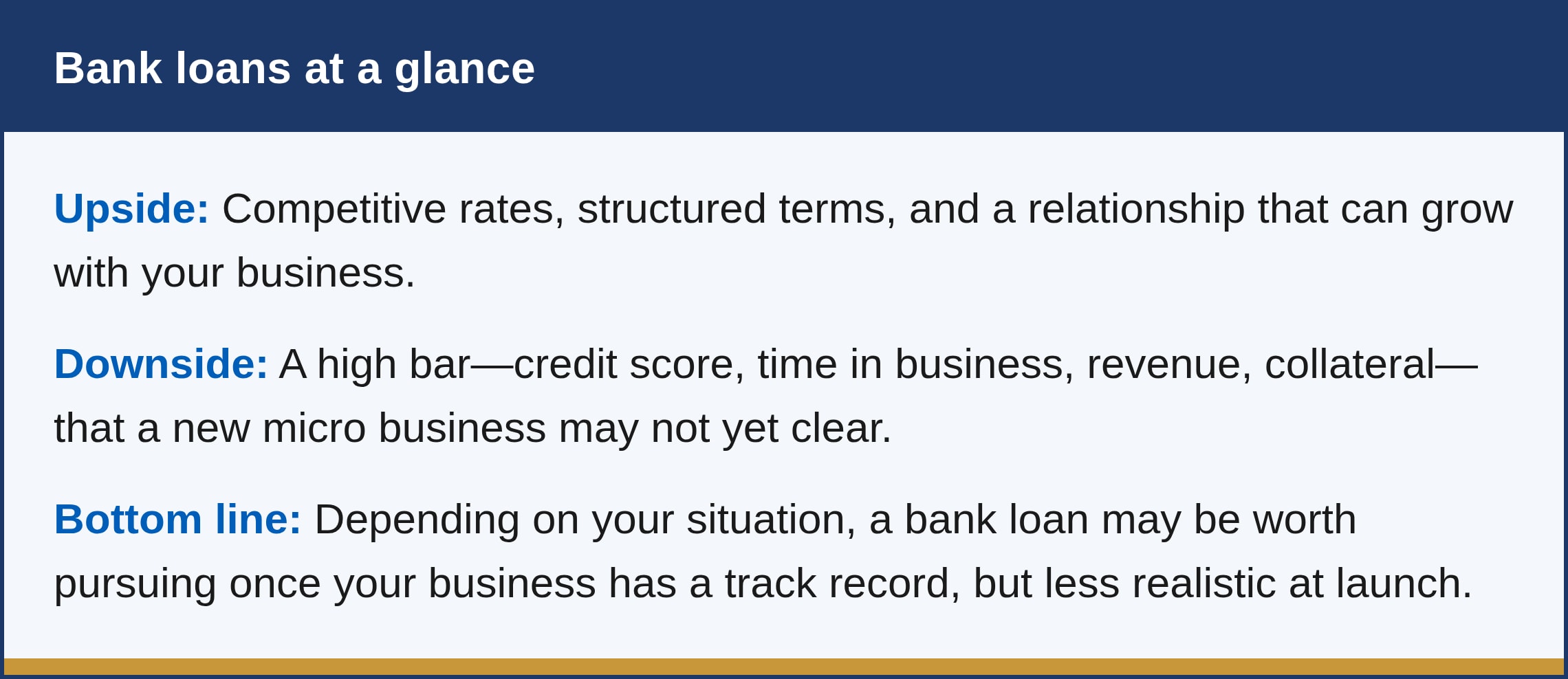
In short, bank loans are a standard for a reason, but they're often the hardest for a micro business to get and may not be the right fit for every business.
“Keep in mind, lenders generally won’t finance 100 percent of your business,” said Trzcinski. “They typically want owners to contribute at least 25 percent of the capital and want to see cash flow equal to 1.3 times the debt.”
So, what are some alternatives?
SBA microloans
The U.S. Small Business Administration's microloan program provides loans of up to $50,000 to help small businesses start up and expand. The average microloan is about $13,000.
Here's how it works. The SBA doesn't lend the money directly. Instead, it funds a network of nonprofit intermediary lenders — often Community Development Financial Institutions, or CDFIs — that make the loans and set the terms. Interest rates typically range from 8 percent to 13 percent, and repayment terms run up to seven years.
Why go through an intermediary rather than the SBA itself? Because the program is designed to put lending decisions in the hands of local, community-based organizations that understand the entrepreneurs they serve.
To be eligible for an SBA microloan, your business must:
- Be a for-profit operation located in the U.S.
- Qualify as "small" under SBA size standards.
- Not fall into an ineligible category (e.g. certain gambling, speculative, or lending activities).
Lenders generally look for a solid personal credit score in the 600s, although exceptions can be made. Also, you may need to pass a "credit elsewhere" test — meaning you can't obtain similar financing from nonfederal sources on reasonable terms.
One notable benefit: The program includes business training and technical assistance, which may be offered at no cost and can be valuable for starting out.
Funds can cover working capital, inventory, supplies, furniture, fixtures, machinery, and equipment. They cannot be used for real estate or to pay off existing debt.
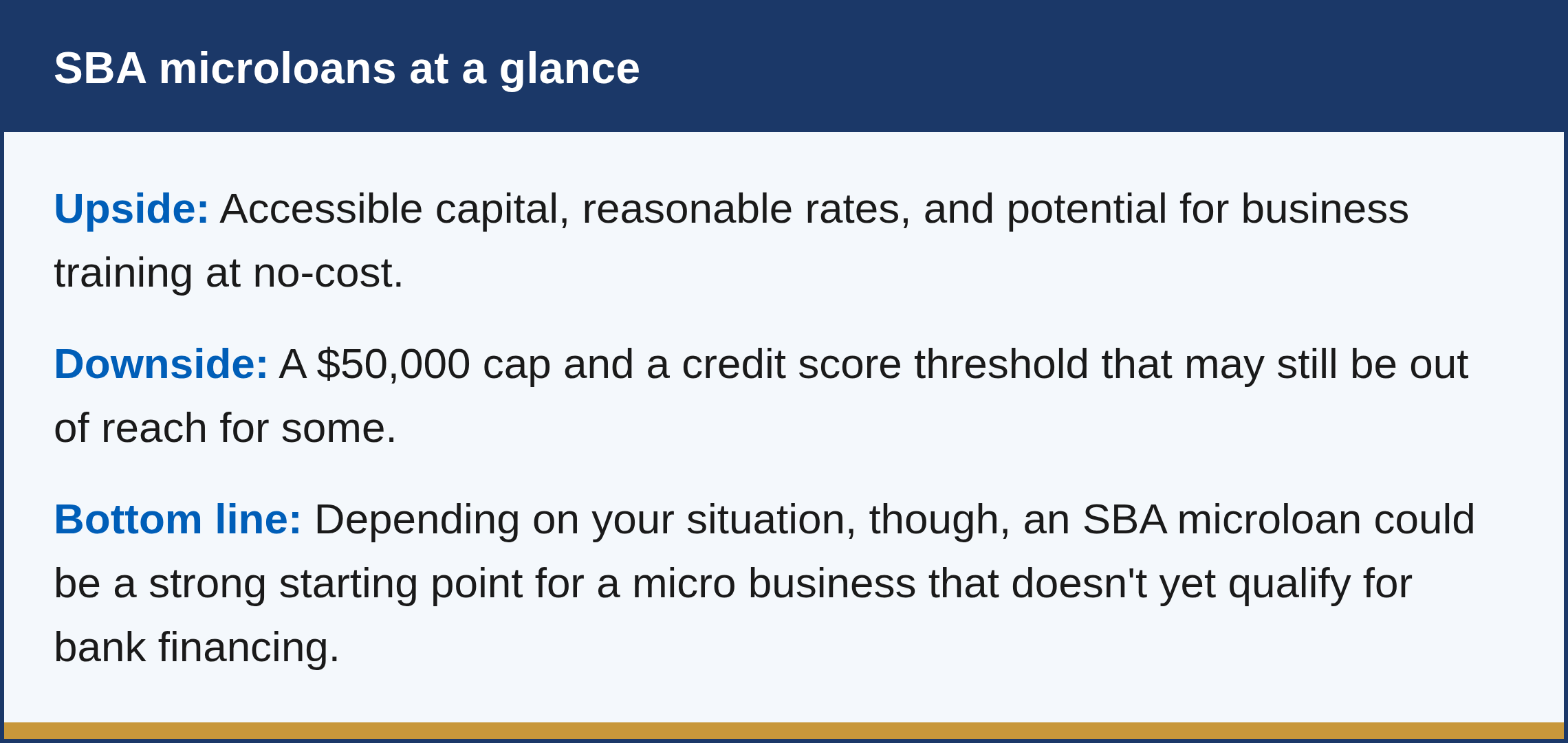
In short, if a traditional bank loan is out of reach, an SBA microloan may be the next logical place to look.
State programs
Every state operates its own mix of small business incentive programs, and they can be a useful source of funding or support that's closer to home than federal options.
The types available generally fall into a few categories:
- Loan programs: Low-interest loans, loan guarantees, or loan participation programs where the state shares risk with a private lender. Many states run these through the federal State Small Business Credit Initiative (SSBCI), which channels U.S. Department of the Treasury funds through state economic development agencies.
- Grants: Direct grants for specific purposes—job creation, technology development, or revitalizing a downtown district, for example. These tend to be targeted rather than general purpose.
- Tax credits and incentives: Credits for hiring, investing in equipment, or locating in certain zones.
- Technical assistance: Free consulting, training, and mentorship, often delivered through Small Business Development Centers (SBDCs).
A good first step is your state's official economic development or commerce department website, which typically maintains a searchable list of active programs. The Council for Community and Economic Research (C2ER) also offers a comprehensive State Business Incentives Database cataloguing more than 2,100 programs across all 50 states.
State programs tend to be less competitive than federal grants, with simpler applications and faster funding — some disburse within 60 days of approval.
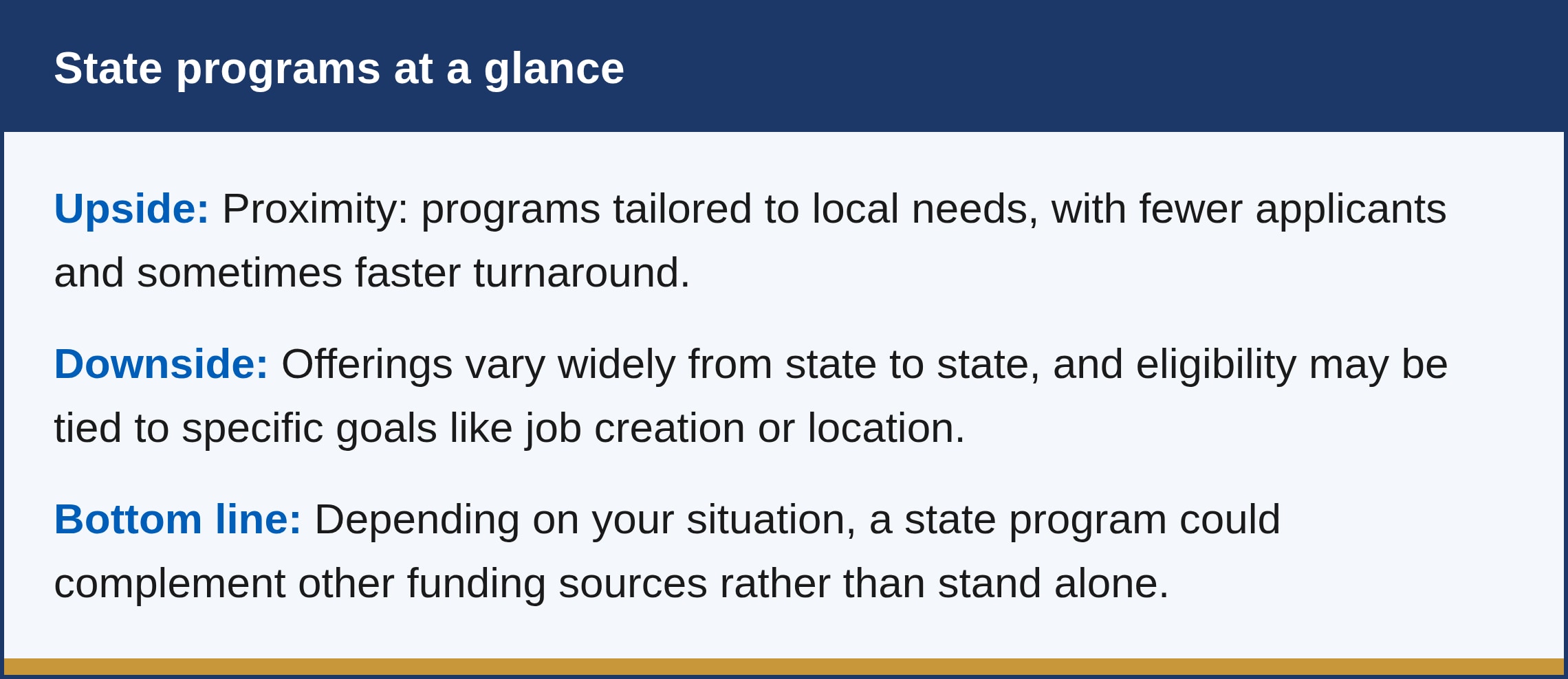
In short, your state's economic development office is worth a look, even if you don't think you'll qualify for federal programs.
Grants
Grants are appealing because, unlike loans, they generally don't have to be repaid. But they come with trade-offs: competition can be fierce, eligibility is often narrow, and the application process can be time-consuming.
Grants for micro businesses come from several sources:
- Federal grants: The central search tool is Grants.gov, which lists opportunities across federal agencies. Many federal grants target specific industries or research and development rather than general business needs. The Small Business Innovation Research (SBIR) and Small Business Technology Transfer (STTR) programs, for instance, fund small businesses engaged in research and innovation.
- State and local grants: As noted above, your state or city economic development office is a primary source. These programs may get fewer applications than national grants, which can improve your odds.
- Corporate and private grants: Many large companies and foundations run grant programs, often focused on women-, minority-, or veteran-owned businesses.
One important caution: Legitimate government grants never charge a fee to apply. If a "grant" asks for an up-front payment to release your funds, treat it as a red flag.
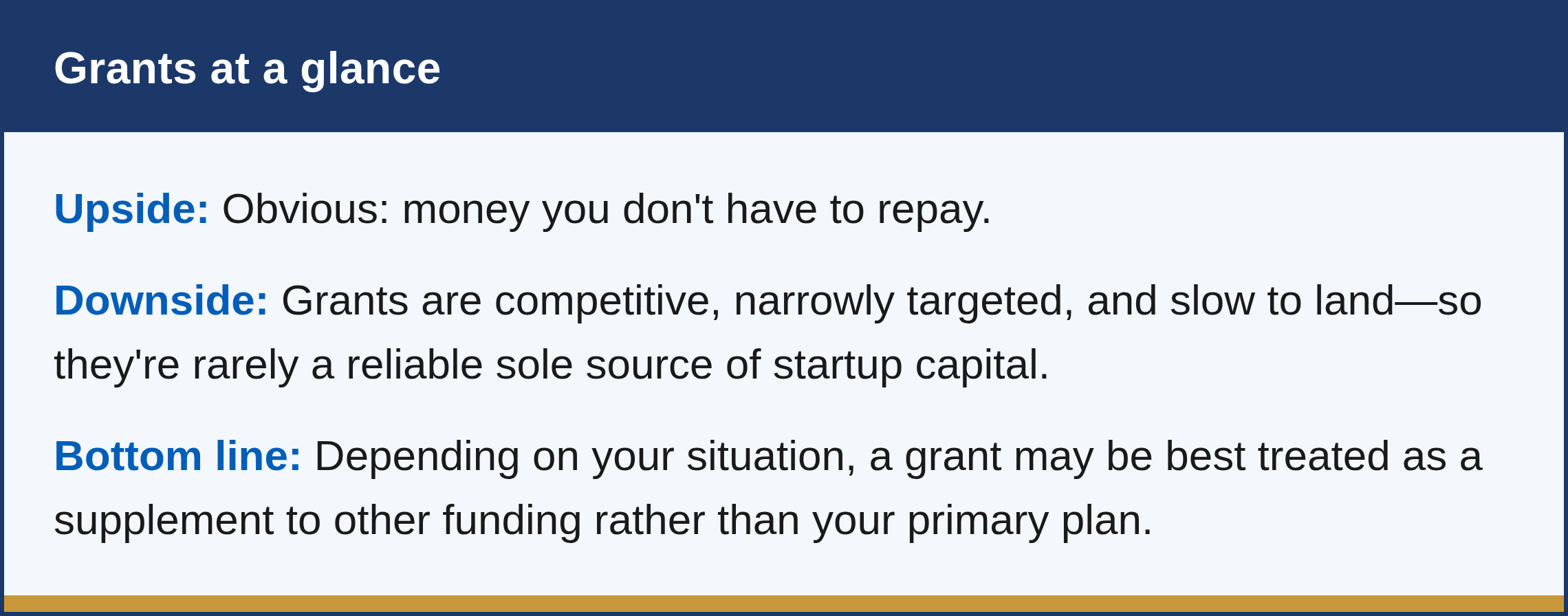
In short, grants are worth pursuing, but don't build your launch timeline around one.
CDFIs
As noted earlier, CDFIs handle SBA micro loans. But they can also offer a wide range of micro business funding options that do not use SBA programs. CDFIs include credit unions, savings and loans, loan funds, and venture capital funds that operate with a primary mission of serving low-income and underserved communities.
In practical terms, that means CDFIs may provide affordable financing to entrepreneurs who may not qualify for traditional bank loans. Their underwriting can be more flexible, and they often pair lending with technical assistance and mentoring — which can be especially helpful for a micro business owner building credit and financial savvy.
That stepping-stone role is a key reason CDFIs matter for micro businesses. Traditional banks often label very small or very new borrowers "unbankable" — too small, too new, or too financially risky to be profitable to lend to. CDFIs are built to serve exactly those gaps.
Notably, many of the nonprofit intermediaries that issue SBA microloans are themselves CDFIs—so the two options can overlap.
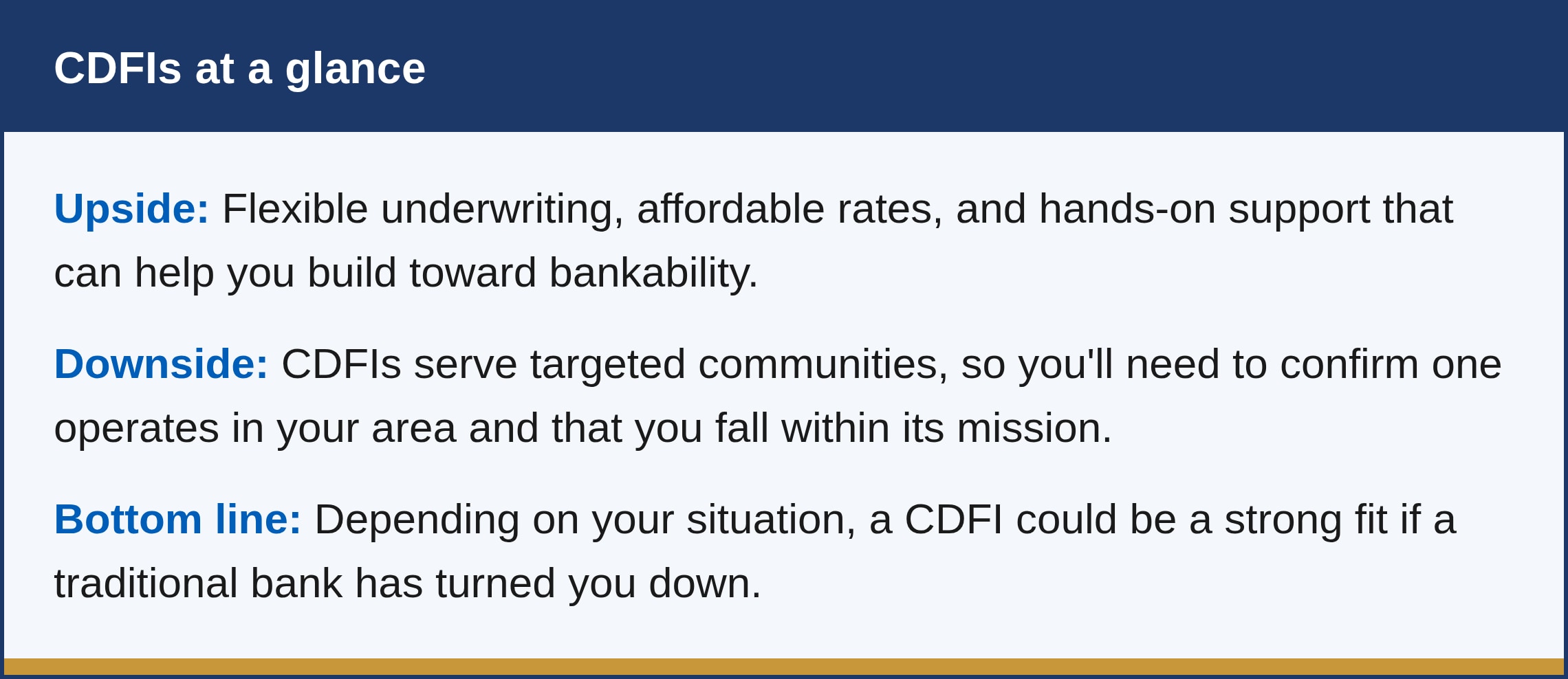
In short, if you've been labeled "unbankable," a CDFI may be exactly the lender you're looking for.
Crowdfunding
Crowdfunding lets you raise small amounts of money from a large number of people, typically through an online platform. There are three main types, and they work very differently.
- Rewards-based crowdfunding. This is the model behind platforms like Kickstarter and Indiegogo. Backers contribute money in exchange for a reward — often a pre-order of your product, early access, or branded merchandise. You give up no equity, and you retain full ownership. The trade-off: Campaigns are often "all-or-nothing," meaning you receive nothing if you don't hit your funding goal. This model can also serve as a marketing tool, validating demand before you commit to production.
- Equity crowdfunding. Under Regulation Crowdfunding (Reg CF), created by the Jumpstart Our Business Startups (JOBS) Act, eligible companies can sell securities — actual ownership stakes — to both accredited and nonaccredited investors through an intermediary registered with the U.S. Securities and Exchange Commission (SEC), such as a broker-dealer or funding portal. A company can raise up to $5 million in a 12-month period. This is distinct from rewards-based crowdfunding: You're selling a piece of your company, not a product. That means loss of some ownership and control, ongoing reporting requirements, and more complex regulations. The Financial Industry Regulatory Authority (FINRA) maintains a list of registered crowdfunding portals.
- Debt-based crowdfunding. Also called peer-to-peer lending, this model functions like a loan. A group of lenders each contribute a portion of the overall total. You repay the principal plus interest over a set period of time. You retain full ownership, but you take on a fixed financial obligation regardless of how the business performs.
Each type has its own legal and regulatory considerations. Equity and debt crowdfunding, in particular, involve more complexity than rewards-based campaigns. It's worth understanding the obligations before you commit.
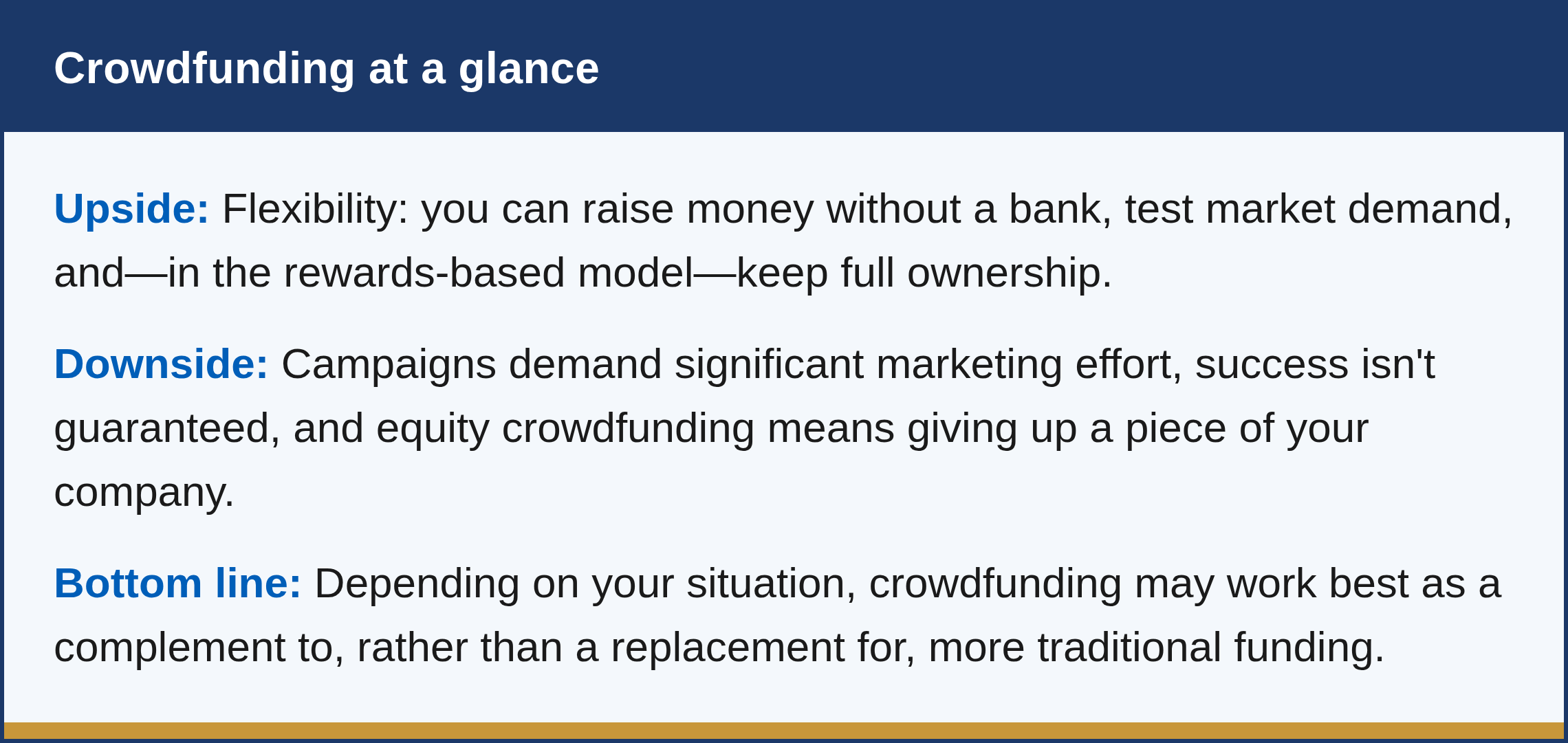
In short, crowdfunding can be a powerful tool, but it's not free money — it's a campaign you have to run.
Conclusion
No single option is right for every micro business. The best approach depends on your situation and often combines several sources — say, personal savings to get started, an SBA microloan for working capital, and a rewards-based campaign to test a new product.
“Regardless of the funding option you choose, becoming creditworthy is what’s most important for gaining access to capital,” said Trzcinski. “Always keep in mind the 6 Cs of lending: character, cash flow, credit, collateral, capacity, and conditions.”
Funding a micro business is rarely a one-step process. Bank loans set a high bar that a new, small operation may not yet clear. But alternatives exist — SBA microloans, state programs, grants, CDFIs, and crowdfunding each offer different terms, requirements, and trade-offs. The right mix depends on your business, your credit, and how much control you're willing to share.
As you sort through these options, it can help to step back and look at the bigger financial picture. A financial professional can help you think through how your business funding decisions fit with your personal financial goals — protecting your income, your family, and the future you're working to build.
If you don't have a financial professional, MassMutual can connect you with one.
_____________________
Frequently asked questions about funding a micro business
Q. What is a micro business?
A. A micro business is a very small operation — typically fewer than 10 employees at a single location and often less than $250,000 in annual sales to start. It's a subset of small business, generally defined by its modest size and revenue.
Q. What's the difference between rewards-based and equity crowdfunding?
A. Rewards-based crowdfunding offers backers a product or perk in exchange for their contribution, and you keep full ownership. Equity crowdfunding, under Regulation Crowdfunding, involves selling actual ownership stakes in your company to investors — which means giving up some ownership and taking on reporting obligations.
Q. How do you find a CDFI?
A. You can search for CDFIs through the U.S. Treasury's CDFI Fund locator, the Opportunity Finance Network's CDFI Locator, or the Federal Reserve Bank of Minneapolis's CDFI Finder, which allows searches by ZIP code.
___________________________
Discover more from MassMutual …
Business owners: Don’t confuse retained earnings with personal savings
5 common business decisions that can impact your personal finances
Be sure your business is always ready to sell
_________________________