| ||||||||||||

Knowing what their business is worth is of growing importance to business owners MassMutual surveyed – with 70 percent saying they’ve had their business valued in the last three years. And 72 percent think it is a relatively high priority.
A business valuation is a documented, credentialed assessment of what your company is worth — and it matters at several key moments, not just when you're ready to sell.
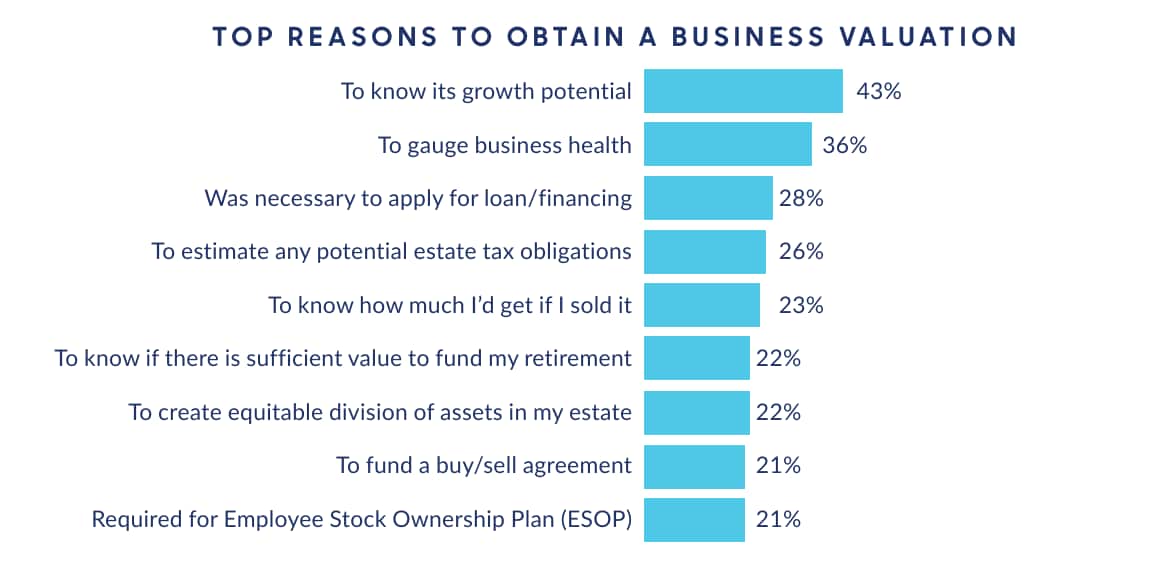
The reasons given by business owners for wanting to know the value of their enterprise tend to focus more on measures of potential growth and financial health rather than as a means of protecting the business or funding retirement. Many business owners also stated they would only complete a valuation when they are getting ready to sell.
But who are the right resources are to solve the valuation equation?
Who should value your business
Many business owners say they would turn to their CPAs as the go-to person followed by a financial professional. But here’s the problem: a good portion of business owners do it on their own.
A proper business valuation is not a “rule of thumb” or a figure agreed to with a handshake; it’s thoughtfully crafted by a credentialed appraiser after thorough research, is documented in writing and is reviewed and updated on a periodic basis. Be sure that any firm or individual you hire to value your business has the proper credentials, such as Certified Valuation Analyst (CVA), Accredited Senior Appraiser (ASA), or Accredited in Business Valuation (ABV).
When to get a business valuation
There are critical times in the life cycle of a business when it is important to have an accurate valuation. In addition to measuring business health and preparing it for sale, here are other times when you may want to consider knowing what your business is worth.
- Funding a buy-sell agreement — If you are obligated to buy out your partner (or a spouse) upon their disability, retirement, or premature death through a buy-sell agreement, you need to agree on a value that everyone (both the buyers and the sellers) is comfortable with ahead of time and have it in writing in the agreement.1 (Related: Funding a buy-sell agreement)
- Retirement income planning — Your business is most likely your largest asset and a key component of your retirement plan. A valuation can help you reconcile your future retirement income needs with the current value of your business to help identify any shortfall. (Retirement planning calculator)
- Estate tax planning — The current federal estate tax exemption has helped make federal estate taxes less of an issue. As of 2026, it stands at $15 million and will be indexed for inflation going forward. Still, for some businesses, planning for a potential tax burden and the impact it could have on the next generation might remain critical for the long-term success of the business. (Related: Keeping a farm in the family)
There are several accepted ways to value a business, and the right method depends on your situation.
Once you know your number, you can focus on the drivers that grow it. (Related: Ways to increase the value of your business)
And remember, a valuation isn't a one-and-done exercise — many advisors suggest reviewing it at least every three years as the business changes. A valuation is particularly relevant as you approach retirement as it is a key first step in gauging your overall exit readiness.
Since 1851, MassMutual has been focused on helping people secure their financial future and protect the ones they love. That mission is why we have thousands of financial professionals to assist you on your journey through insurance, investing, retirement planning, estate management, and more. You can let us know you’d like to talk to one and we’ll have one of our financial professionals contact you.
_________________
Frequently Asked Questions about business valuation
Q. Why do I need a business valuation?
A. A valuation tells you what your business is truly worth so you can plan for growth, retirement, and succession with real numbers instead of guesses. It's also essential at key moments like funding a buy-sell agreement or estimating estate taxes. (Related: Understanding the different ways to value your business)
Q. How often should I get my business valued?
A. Many advisors recommend reviewing your business valuation at least every three years, or whenever a major event occurs, because value shifts as the business grows and changes. A stale valuation can lead to underfunded agreements and retirement shortfalls. (Related: Business owners: Gauging your exit readiness)
Q. Can I value my business myself?
A. You can estimate a rough figure, but owners who value their own businesses often miss the mark by a wide margin. A credentialed appraiser produces a documented, defensible number.
________________________
Discover more from MassMutual…
Increasing the value of your business
Are you doing enough to protect your highest earners?
This article was originally published in July 2016. It has been updated.
__________________